Touts & Street Solicitation 客引き
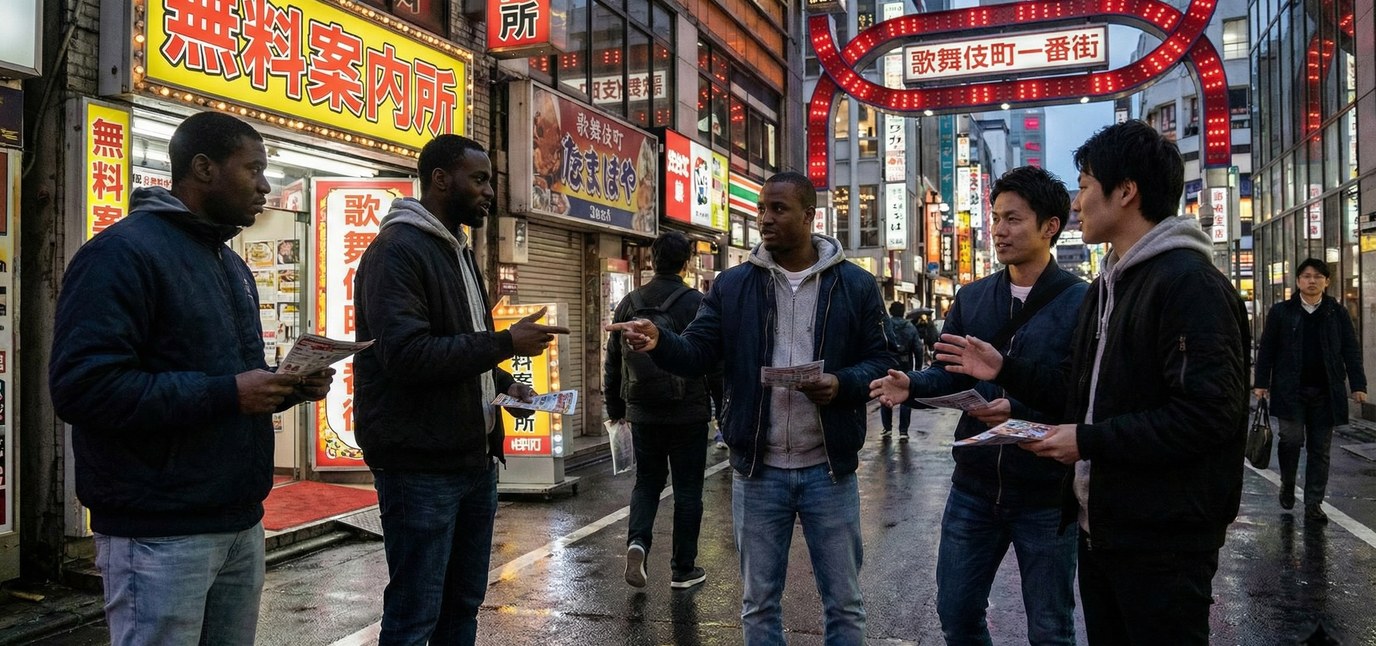
Touts (客引き, きゃくひき) are people who approach you on the street
to solicit business for bars, clubs, or other venues. While some are legitimate, many are
associated with scams or overpriced venues.
What to expect:
• People approaching you on the street, especially in entertainment districts
• Promises of "good deals," "no cover charge," or "free drinks"
• Pressure to follow them to a venue
• Often in areas like Kabukicho, Roppongi, or other nightlife districts
• May be aggressive or persistent
General rule: It's usually best to avoid touts. Legitimate venues don't need
to solicit customers on the street. If a deal sounds too good to be true, it probably is.
Touts often lead to overpriced venues, hidden charges, or scams.
How to handle:
• Politely decline: "いいえ、結構です" (No, thank you) or simply "No"
• Keep walking—don't stop to engage
• Don't follow them even if they're persistent
• Trust your instincts—if something feels off, it probably is
• Choose venues yourself rather than being led somewhere
Red flags: Promises of "free" anything, pressure tactics, refusal to show
prices upfront, venues in hidden locations, or anything that makes you uncomfortable.
Legitimate venues are transparent about pricing and don't need aggressive solicitation.
Best practice: Research venues in advance or choose places with visible
signage and clear pricing. Walk into places yourself rather than being led by touts.
If you're unsure about a venue, check reviews or ask locals.
Safety: While most touts are just trying to get business, some may be
associated with scams or criminal activity. It's better to be cautious. If you feel
threatened or harassed, move to a well-lit, populated area or seek help.

Tipping チップ
Tipping culture in Japan is very different from many Western countries. In most situations,
tipping is not expected and can even be considered rude or confusing.
General rule: Tipping is NOT expected in Japan. In most situations, it's
not necessary and may be refused or cause confusion. Service charges are usually included
in prices.
Where NOT to tip:
• Restaurants and bars (service is included)
• Taxis (not expected)
• Hotels (not expected)
• Most service situations (not expected)
Exceptions: Some high-end establishments or places catering to international
customers may accept tips, but it's still not expected. If you want to show appreciation,
a simple "ありがとうございます" (thank you) is usually sufficient.
What to do instead: Show appreciation through politeness and respect.
Say "ありがとうございます" (thank you) sincerely. Follow local customs and etiquette.
Being respectful and courteous is more valued than monetary tips.
Special situations: In some very specific situations (like certain
traditional ryokan or high-end services), there may be exceptions, but these are rare.
When in doubt, don't tip—it's the safer choice.
Why no tipping: In Japan, good service is considered standard, not
something extra that needs to be rewarded. Prices usually include service charges, and
staff are paid salaries that don't depend on tips.
Hookups & Expectations 出会いと期待
Navigating romantic or sexual encounters in Japan's nightlife requires understanding
cultural norms, consent, and realistic expectations.
Cultural context: Japan has its own cultural norms around dating, sex,
and relationships. These may differ from Western expectations. Be respectful and
understanding of cultural differences.
Consent is essential: Always prioritize clear, enthusiastic consent.
This is universal, regardless of culture. Don't assume anything. Communication is key.
If someone seems uncomfortable or unsure, respect that.
Language barriers: If there's a language barrier, be extra careful
about consent and communication. Misunderstandings can happen easily. Make sure you
both understand what's happening and are comfortable with it.
Realistic expectations: Not everyone in nightlife venues is looking
for hookups. Many people are just out to have fun with friends. Don't assume someone's
intentions. Be respectful and don't be pushy.
Respect boundaries: If someone declines or seems uninterested, respect
that immediately. Don't persist or pressure. Everyone has the right to say no at any time.
Safety: Always prioritize safety. Meet in public places first if possible.
Tell someone where you're going. Trust your instincts. If something feels wrong, leave.
Your safety is more important than anything else.
Cultural sensitivity: Be aware that cultural norms around dating, sex,
and relationships vary. What's normal in one culture may not be in another. Be respectful,
open-minded, and communicate clearly.
Important: Always prioritize consent, safety, and respect. These are
universal values that apply regardless of culture or location. Be a respectful person
and expect the same in return.