🛁 Relaxation

Unwind and recharge after a night out

Oil / Chinese / Thai Massage

Massage services are widely available in Japan, offering various styles including oil massage, Chinese massage (指圧, ), and Thai massage. Many places stay open late, making them perfect for post-nightlife relaxation.

What to expect:
• Various massage styles: oil, Chinese (shiatsu), Thai, and more
• Time-based pricing (typically ¥3,000-8,000 per hour)
• Many places open until late (10 PM - midnight or later)
• Professional therapists
• Private rooms for individual sessions
• Some places offer couples massage
Types of massage:
Oil massage: Full-body massage with oil
Chinese massage (指圧): Pressure point massage, often without oil
Thai massage: Stretching and pressure point techniques
Swedish massage: Western-style relaxation massage
Deep tissue: More intense, therapeutic massage
Best areas: Found throughout major cities. Many are in entertainment districts and stay open late. Some specialize in specific types of massage, while others offer variety.
Pricing: Varies by type, duration, and location. Hour-long sessions are most common. Some places offer package deals or longer sessions. Couples massage usually costs more.
Reservations: Many places accept walk-ins, but reservations are recommended, especially on weekends or during peak hours. Some popular places book up quickly.

Foot Massage

Foot massage (足つぼマッサージ, ) is popular in Japan, focusing on pressure points in the feet. It's often more affordable than full-body massage and perfect for tired feet after a night of walking.

What to expect:
• Focused massage on feet and lower legs
• Pressure point techniques (reflexology)
• More affordable than full-body massage (typically ¥2,000-5,000 for 30-60 minutes)
• Often available in chairs rather than tables
• Many places open late
• Quick and effective for tired feet
How it works: You sit in a comfortable chair while a therapist works on your feet and lower legs. The focus is on pressure points that correspond to different parts of the body. It's relaxing and therapeutic.
Best areas: Found in many neighborhoods, especially near entertainment districts. Some places specialize in foot massage, while others offer it as part of a menu of services.
Perfect for: After a long night of walking, standing, or dancing. Great for quick relaxation without the time or cost of a full-body massage. Many people find it very effective for relieving foot and leg fatigue.

Seitai (Body Adjustment)

Seitai (整体, ) is a Japanese form of body adjustment and therapeutic manipulation. It focuses on correcting posture, alignment, and relieving tension through manual techniques.

What to expect:
• Therapeutic body adjustment and manipulation
• Focus on posture, alignment, and tension relief
• Techniques may include stretching, pressure, and joint manipulation
• Time-based pricing (typically ¥3,000-6,000 per session)
• Professional practitioners
• Often more therapeutic than purely relaxing
How it works: A seitai practitioner uses manual techniques to adjust your body, relieve tension, and improve alignment. It's similar to chiropractic or osteopathic manipulation but with Japanese techniques and philosophy.
Best for: People with specific aches, pains, or alignment issues. Good for addressing problems from long nights, poor posture, or physical stress. More therapeutic than a relaxation massage.
Finding practitioners: Seitai clinics and practitioners are found throughout Japan. Some stay open late, others operate during normal business hours. Look for 整体 signs or search online for seitai clinics in your area.

Saunas

Saunas (サウナ, ) are popular in Japan for relaxation and detoxification. Many facilities stay open late or 24 hours, making them perfect for post-nightlife recovery.

What to expect:
• Hot sauna rooms (often 80-100°C)
• Cold plunge pools or showers for contrast
• Rest areas for cooling down
• Entry fees typically ¥1,000-3,000
• Some places have time limits, others allow extended stays
• Often part of larger bath facilities
How to use: Heat up in the sauna (start with shorter sessions if you're new), then cool down with a cold shower or plunge. Repeat the cycle. Rest in between. Stay hydrated. The contrast between hot and cold is part of the therapeutic effect.
Best areas: Found throughout Japan. Some are standalone facilities, others are part of larger bath complexes (sento or super sento). Many stay open late or 24 hours.
Etiquette: Shower before entering. Don't wear swimsuits in traditional saunas (though some modern facilities allow them). Be quiet and respectful. Don't stay too long if you feel unwell. Stay hydrated.
Health benefits: Saunas can help with muscle relaxation, stress relief, and detoxification. The hot-cold contrast can improve circulation. Great for recovering from a long night out.

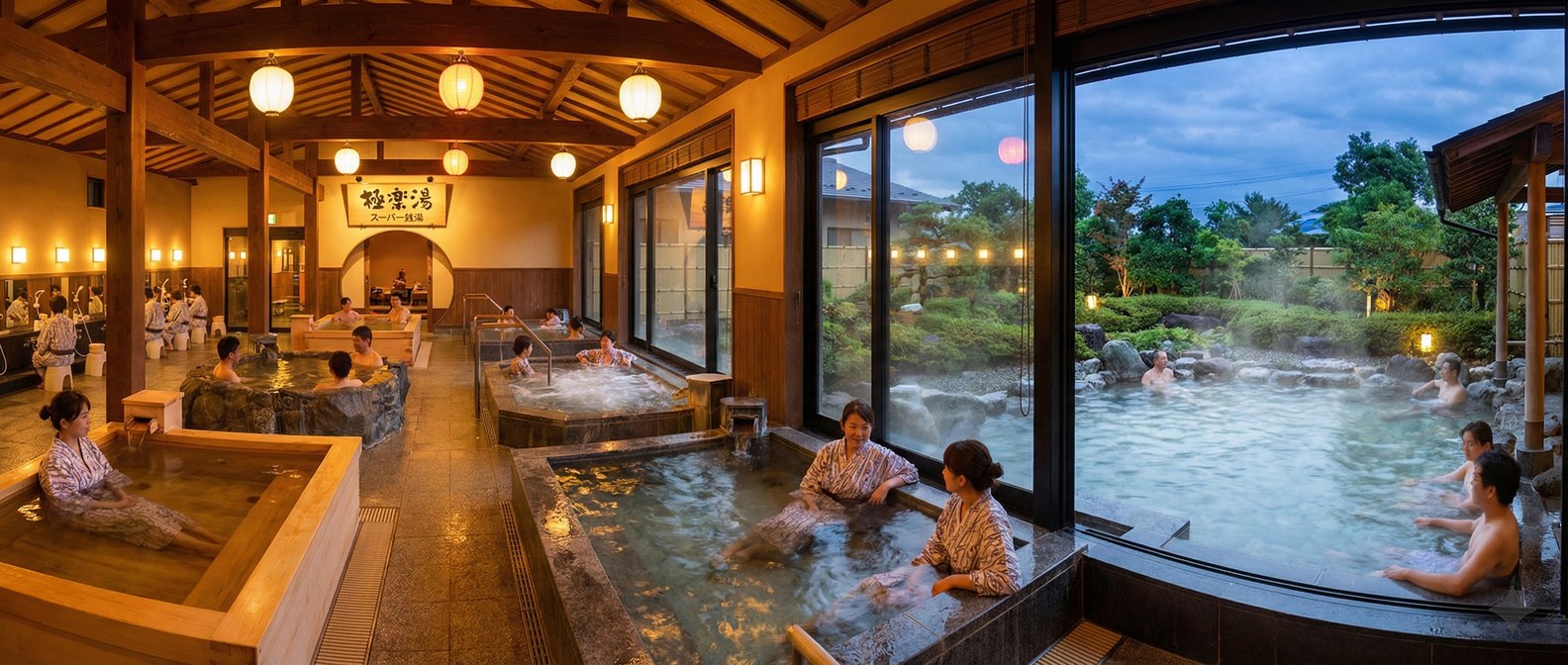
Super Sento (Large Public Baths)

Super sento guide banner

Super sento (スーパー銭湯, ) are large public bath facilities that offer extensive amenities including multiple baths, saunas, relaxation areas, and sometimes restaurants. Many stay open late or 24 hours.

What to expect:
• Multiple types of baths (hot, cold, jet, outdoor, etc.)
• Saunas and steam rooms
• Rest areas with tatami mats or reclining chairs
• Entry fees typically ¥1,000-2,500
• Some places allow overnight stays
• Often have restaurants, vending machines, or snack areas
• Separate areas for men and women
How it works: Pay entry fee, get a locker key, undress in the changing room, shower thoroughly, then enjoy the various baths. You can stay as long as you like (within operating hours). Rest areas allow you to relax between baths.
Types of baths:
Hot baths: Various temperatures
Cold baths: For contrast therapy
Jet baths: With water jets for massage
Outdoor baths: Open-air bathing
Specialty baths: Carbonated, electric, herbal, etc.
Etiquette: Shower thoroughly before entering any bath. Don't bring towels into the bath water. Be quiet and respectful. Don't stare. Follow all facility rules. Some places have tattoo policies—check in advance if you have tattoos.
Overnight stays: Some super sento allow overnight stays in rest areas, making them a budget-friendly accommodation option. Perfect if you miss the last train and want a place to relax and sleep.
Best areas: Found throughout Japan, especially in major cities. Many stay open 24 hours or until very late. They're popular with locals and can be great for experiencing Japanese bath culture.