Taxis タクシー
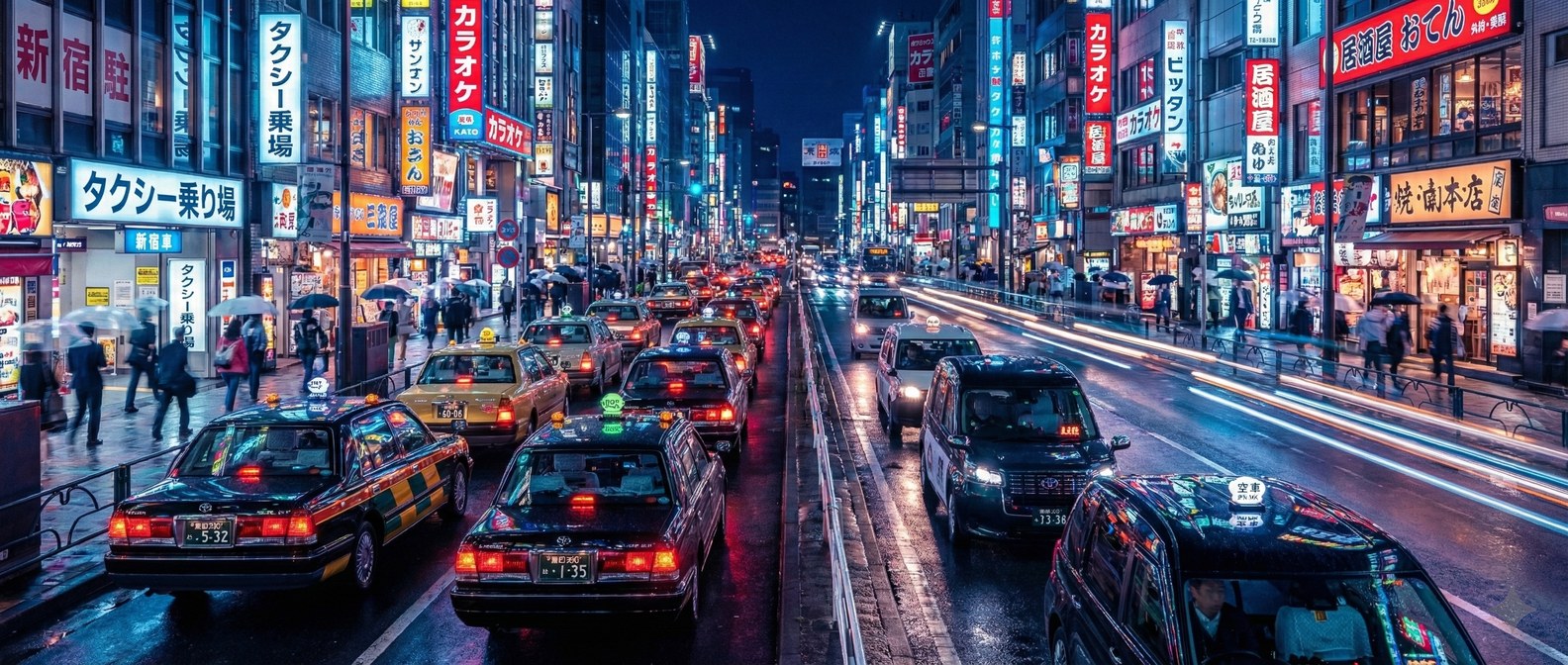
Taxis are the most straightforward option when trains stop running (usually around midnight to 1 AM, depending on the line and day).
They're reliable, safe, and available throughout major cities, though costs can add up quickly for longer distances.
In places like Tokyo, you can pretty much walk out to any major street and find a cab -except just after the last train -or when it rains. Around Christmas / New Year’s could also be a huge issue. Just hunker down, go a few more rounds and wait for the cabs to come back or the first train.
• Flag down a taxi with a red light (空車, くうしゃ) in the front windshield and the light on the roof on.
• Taxis with green lights are occupied. Yellow means booked.
• Stand at designated taxi stands near stations for easier pickup
• You can also call a taxi using apps like GO, JapanTaxi or Uber (which connects to local taxis in Japan)
Taxi Apps タクシーアプリ
Uber exists in Japan, but coverage is limited compared to many countries, and availability can be thin depending on the city and time.
A more practical option for most visitors is the GO taxi app, which is widely used in Japan and generally tourist-friendly.
Tip: If apps fail, you can still flag taxis on major roads or ask staff to call one for you.
Late-Night Buses 深夜バス
Unlike some countries, Japan has very few late-night city buses. In most areas, once trains stop, public transport options drop sharply.
Don’t plan your night assuming you can catch a bus home at 2:00 a.m. — in many cities, it simply won’t exist (or it will be very limited and infrequent).
Tip: If you’re heading far out of the city, decide your “last train” time in advance.
Rental Bikes & Scooters シェアサイクル・電動キックボード
Shared bicycles are common in many cities, but tourist usability varies. At the moment, the most tourist-friendly option is generally LUUP bikes, because foreigners can usually register and use the service without too much friction.
Scooters are a different story: availability, app setup, and rules can be stricter and more confusing, and not all services are tourist-friendly yet.
Etiquette: Ride predictably, follow local traffic rules, and park only in approved areas.
Tip: If you've been drinking, skip bikes and scooters — use a taxi instead.
Designated Driver Services 代行運転
If you've driven to a nightlife area and had drinks, designated driver services (代行運転, だいこううんてん) will drive you and your car home. This is a common and legal service in Japan, especially popular in areas with limited public transport.
• Call a designated driver service (many operate 24/7)
• A driver arrives, takes your keys, and drives you and your car to your destination
• You pay a fee based on distance and time
• The driver then returns to their base (often by taxi or company vehicle)
Missing the Last Train
Missing the last train (終電, しゅうでん) is a common experience in Japan's nightlife scene. Trains typically stop running between midnight and 1 AM, and don't resume until around 5 AM.
• Stay out until first train: Many people continue at karaoke, 24-hour restaurants, or internet cafés until trains resume
• Take a taxi: Most reliable but can be expensive for longer distances
• Find accommodation: Business hotels, love hotels, or capsule hotels offer late-night check-in
• Wait at a 24-hour place: Convenience stores, internet cafés, or manga cafés provide a place to wait
• Internet/Manga cafés: Private booths, showers, and drinks available
• Karaoke: Many offer late-night packages until morning
• 24-hour restaurants: Family restaurants like Denny's or Gusto
• Convenience stores: 7-Eleven, Lawson, FamilyMart are open 24/7 with seating areas